


How to migrate your WordPress website using Duplicator
Duplicator is a dependable migration plugin that facilitates transferring your WordPress website between domains. This free tool simplifies site duplication.
To manage disk space effectively, make sure there are no backups stored in the public_html directory of the domain you’re transferring from. Including backups in your Duplicator backup will inflate the backup file size, affecting disk space usage on the destination domain.
Steps
-
1To get started, sign in to your WordPress Admin dashboard (e.g. http://example.com/wp-login.php) on the site you are copying your content from. Navigate to Plugins > Add Plugin and search for Duplicator.
-
2The correct plugin is "Duplicator – Backups & Migration Plugin – Cloud Backups, Scheduled Backups, & More". Click on Install Now > Activate.
Duplicator’s setup page will open, and you can Skip the "Email Notifications" opt-in. -
3You will be redirected to Duplicator’s New Backup page. The default settings under General, Backup Filters, and Installer can be left unchanged.
Setting a password and enabling encryption under Security & Notes are optional.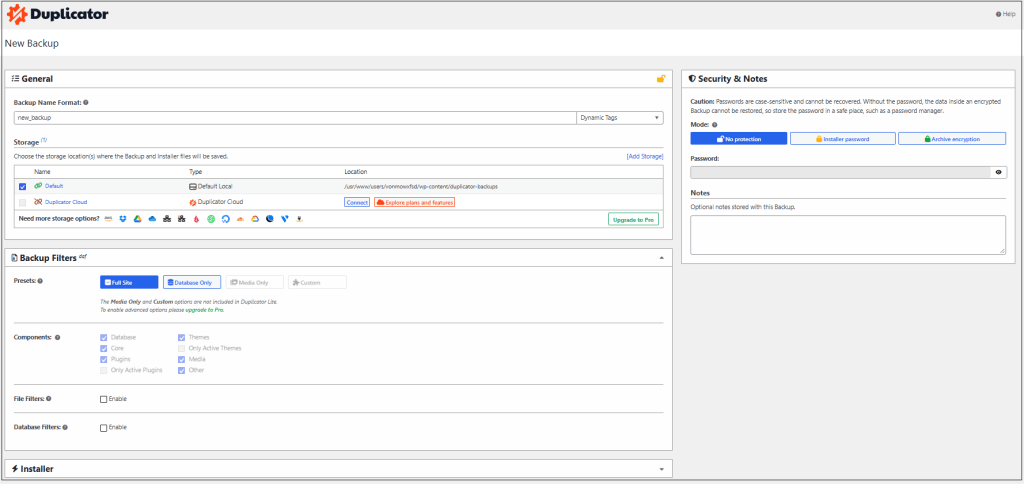
-
4Duplicator will scan your website, which may take some time depending on its size. Once the scan is complete, an overview of the backup will be displayed. Review the details, then click Create Backup to proceed.
-
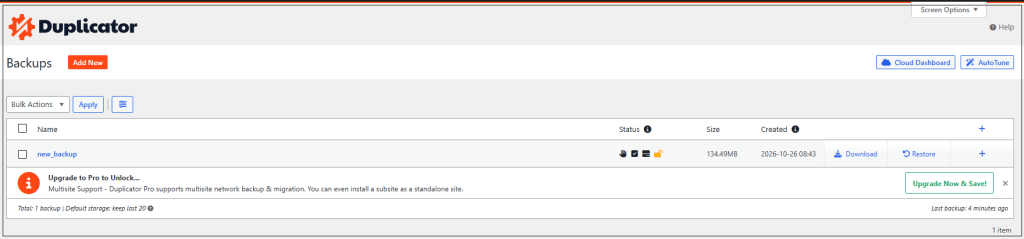
5Once the build process has been completed, you should see the following screen:
-
6Click on the Download > Both Files button. This action will save a compressed file (. daf) and an installer file to your computer.
It's crucial to understand that you cannot combine the zip file from one backup with the installer.php file from another backup. Both files must originate from the same backup you generated. The name of the installer file will also be unique and must be used as it is for Step 9. -
7Once the files have been downloaded to your local machine, you can use an FTP client such as FileZilla to upload them to the destination domain. Before uploading, we recommend backing up and removing any existing content from the destination directory to avoid potential conflicts.
The following articles will guide you through uploading the files to your domain via FTP:
Where to find your FTP login details
How to use FileZilla FTP -
8Open the installer file in your browser by navigating to your-new-domain/installer-file-name.php. Replace your-new-domain with your destination domain name and installer-file-name.php with the full name of the installer file you downloaded.
For example:
example.co.za/new_backup_c2c2e86e15824af93210_20261026084323_installer.php
You will see a screen like the one below:
-
9The Overview page can be left with its default options. The Setup page can remain on ‘Default’.
-
10Under Setup > Database Connection, you'll be prompted to set up the new database connection. This means you'll need to create a new database and input its details. You can refer to the following article for guidance on creating the database:
Create and manage a database
Note: When entering your Host/Server details in Duplicator, replace 'localhost' with the actual database server name (e.g. sql32.jnb2.host-h.net), which you can find under Manage MySQL in your control panel. -
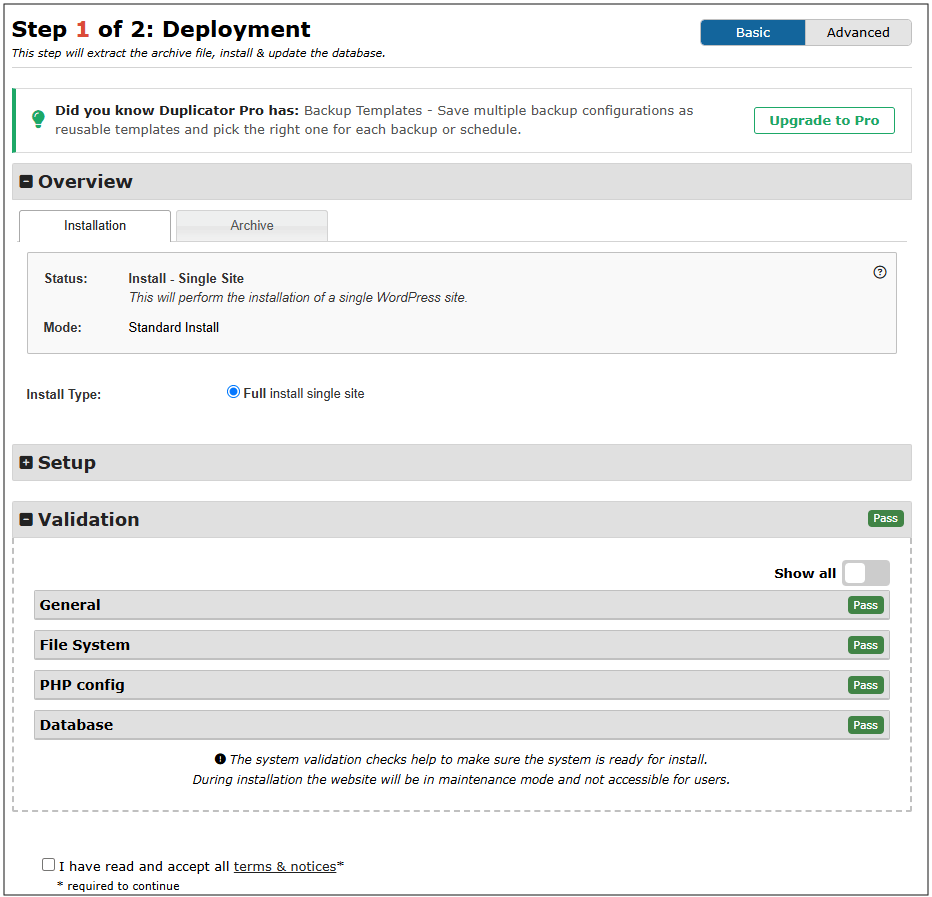
11Once you have entered your database details, you can enter a new Site Title, click Validate, and you should then see the following page:
-
12Tick the box to accept the terms & notices and then click on Next.
-
13A confirmation page will appear. Click on OK and Duplicator will proceed to extract your content from the archive file you uploaded to the site.
-
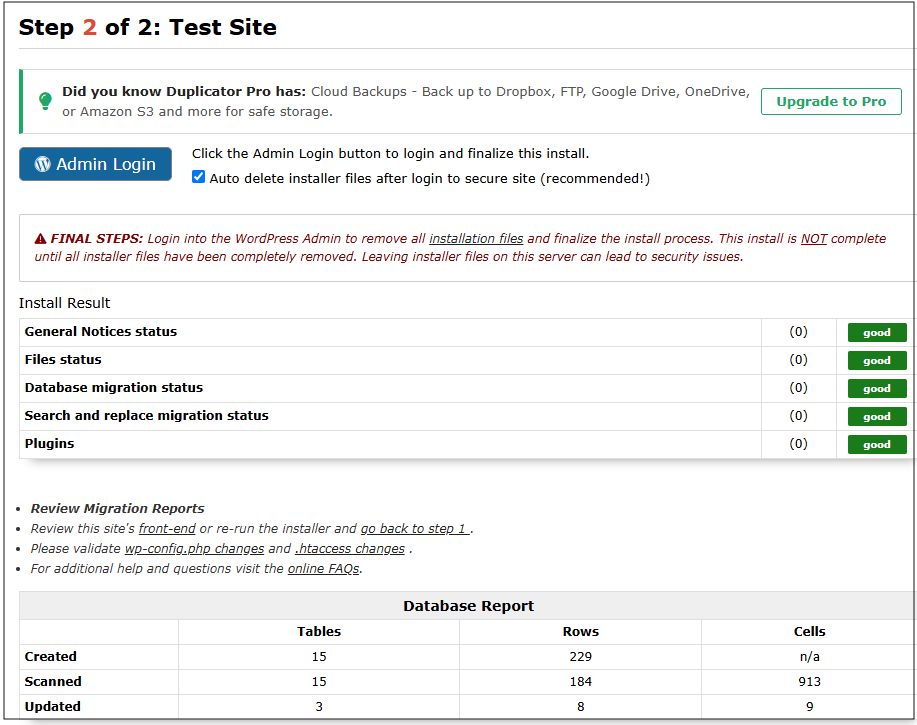
14Once the files have been extracted, click Admin Login to access your website’s backend. Use the same login credentials as those for the original website from which you created and downloaded the backup.
-
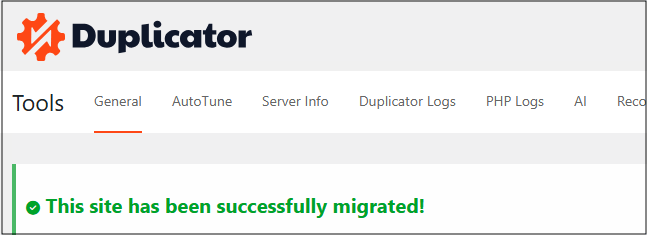
15You have now successfully migrated your website using Duplicator!